FAST Focus
Written by Tanay Misra
Focus [mass noun] – The state or quality of having or produced clear visual definition
– Oxford Dictionary (online)
My head was buzzing with ideas. Great ideas and clear paths on how to bring them alive. “Can we just focus our ideas?”. Just like a grain of salt renders the entire taste of ice cream insipid, this statement was like a rude interruption to the flow of our ideation and discussion. “How much more do we focus – isn’t it all so clear?” I thought to myself while looking for the anonymous distractor. This was the fifth time I was hearing that statement and was beginning to wonder if this was a background score in the otherwise great workshop we were having. Why would someone break the flow each time? How was focus missing? Have we missed a certain aspect? And then it dawned on me. This was not a difference in directions but a clash in understanding. The person crying out for Focus mistakenly believed focus meant few things because that is what they were taught – to think and do less. But this is not a rare disorder, it is a widespread disease. Focus, as the definition from the world of optics teaches us, is not about quantity of actions but about clarity of actions. And clarity was certainly not what was amiss in that workshop.
Now that we know what Focus is not, let me try to articulate my version of Focus – aspects of Focus that define every edge of Focus as a philosophy. I dub this FAST Focus, to honour the ability to zero in sharply towards the subject at hand.
Frisson
This is where things get poetic. Just like a subject has to be interesting for the photographer to focus on, the attention of my focus needs to be full of frisson – a lovely French word that encompasses excitement, fear and thrill all into one. What we seek in life are audacious and ambitious goals. If we don’t have them then we need to create them. This is not the responsibility of the Boss, Organization, Family or God. These are our energizing quests and you can certainly have many at a time. If a thought or idea generates Frisson, it always stays in focus. Are your goals or areas of focus generating any Frisson? Use this as a yardstick to decide where to focus on and what to do (as well as what not to do).
Action
Once the area of Focus is defined, how do you go about achieving it. This is where action kicks in. An area of Focus is a noun (e.g. New Business Opportunities) while Action is a verb (e.g. Scan and shortlist 3 areas where I can extend my current business). This is a fundamental difference that helps our minds bring clarity into how larger goals break into daily actions. Dreaming big without doing anything is just well dreaming. The Daily To-Do list starts here and should always start with a verb to keep it specific and actionable. What resources to use for a perfect To-Do list? Anything that’s accessible and easy – I prefer the pen & paper approach coupled with an App. I use Wunderlist where I list actions as I think of them and then a simple Notebook (Leuchtturm1917 is my favourite as it has blank numbered pages) to prioritize. But the best solution is the one that works for you – experiment with what works and find your own style. Remember that the quality of output will not depend on the nature of the solution but the clarity of the action.
Single-Tasking
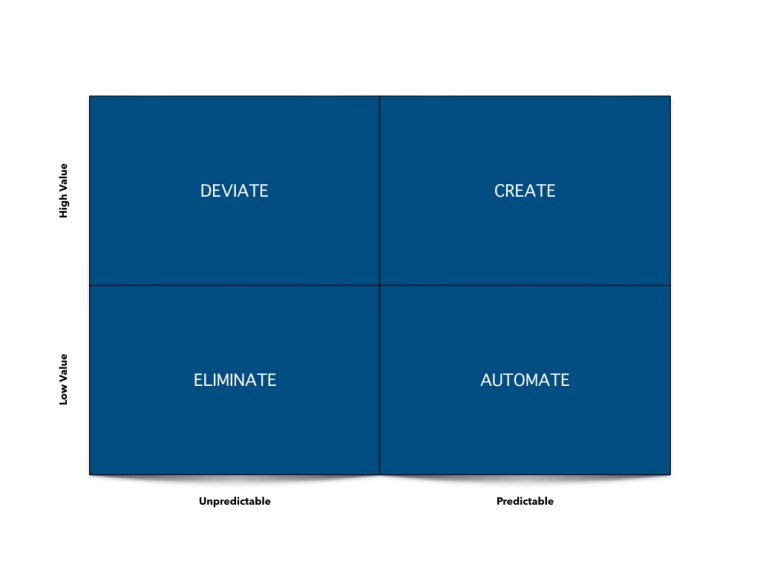
So having decided the actions, how does one decide the prioritization? Because all actions are not created equal. I am a big advocate and believer of single tasking for the simple reason that it is proven to be more effective than multi-tasking and can help me complete tasks better and faster. Multi-tasking gives the illusion of doing more but in reality we often achieve lesser. The economist and psychologist Herbert Simon summed this perfectly “A wealth of information creates a poverty of attention”. Action prioritization should be basis tasks where we add highest impact or value and not from ease or time. Just because something is difficult or takes more time doesn’t make it more worthwhile. Yes sometimes higher value tasks are also the ones we often don’t want to start because we want to attack the easier wins like answering mails. But this is a flawed strategy because we end up wasting valuable energy on relatively easier tasks like e-mails. This often leaves us “exhausted” for cognitively more demanding tasks like mulling over a problem or re-thinking direction of our business. The age of social media has accelerated the expectations of instant gratification and there is huge gratification in returning mails but are they adding more than they take? My single tasking focus is on predictable high value tasks at the time of highest energy (early mornings for me) . I then set aside time for automated and unpredictable tasks during the work day. The matrix below is my Focus Map for prioritization and I try to spend as much of my first few working hours in the Create Zone – highest value tasks for the day.
Tomato
No we are not digressing into a discussion on vegetables but instead trying to hack time by achieving more in less. Parkinson’s Law states that work expands to fill the time available for its completion. Tomato or Pomodoro (Italian for Tomato) Technique uses Parkinson’s Law as a hack by breaking work in short intervals to deliver actions via hyper concentration and intensity. These durations are usually 25 minutes but can be any length for which you can keep your focus & attention. For me 45 minutes work well. Some methods to make this uber-effective are:
- Keep your phone on silent with notifications off. Work at a location where you won’t be interrupted like an office room, quiet coffee shop, home or put headphones on at your cubicle so that people don’t assume you are free for a quick chat
- Use a Pomodoro App to time yourself with the timer visible to help you pace & focus
- Start the timer when you are ready to “attack” the task at hand with all preparation done
- At the end of the Pomodoro (set duration) take a 5-10 minute break. This is very important as it helps you recharge and get back to the next Pomodoro. Avoid actively thinking about work and instead complete tasks that could get in the way of your next Pomodoro (wash room breaks, drinking water or returning a phone call)
- Attempt 4-5 Pomodoros a day and see your productivity soar
Achieving Focus is all about clarity rather than quantity of tasks. Every day is different and on some days Less is More while on others you might need to focus on 5 different things. The FAST Focus technique helps you sharpen your focus to achieve quality with satisfaction. Do you have any hacks that help you increase your focus?

 nlightened.me
One Comment on “FAST Focus”